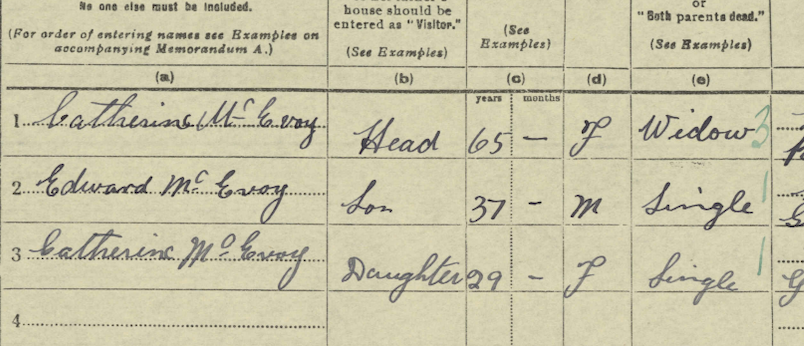
Hello to my Great Grandmother in the 1926 Irish Census
Ireland recently released the first census post creation of the Irish Free State — taken in 1926.
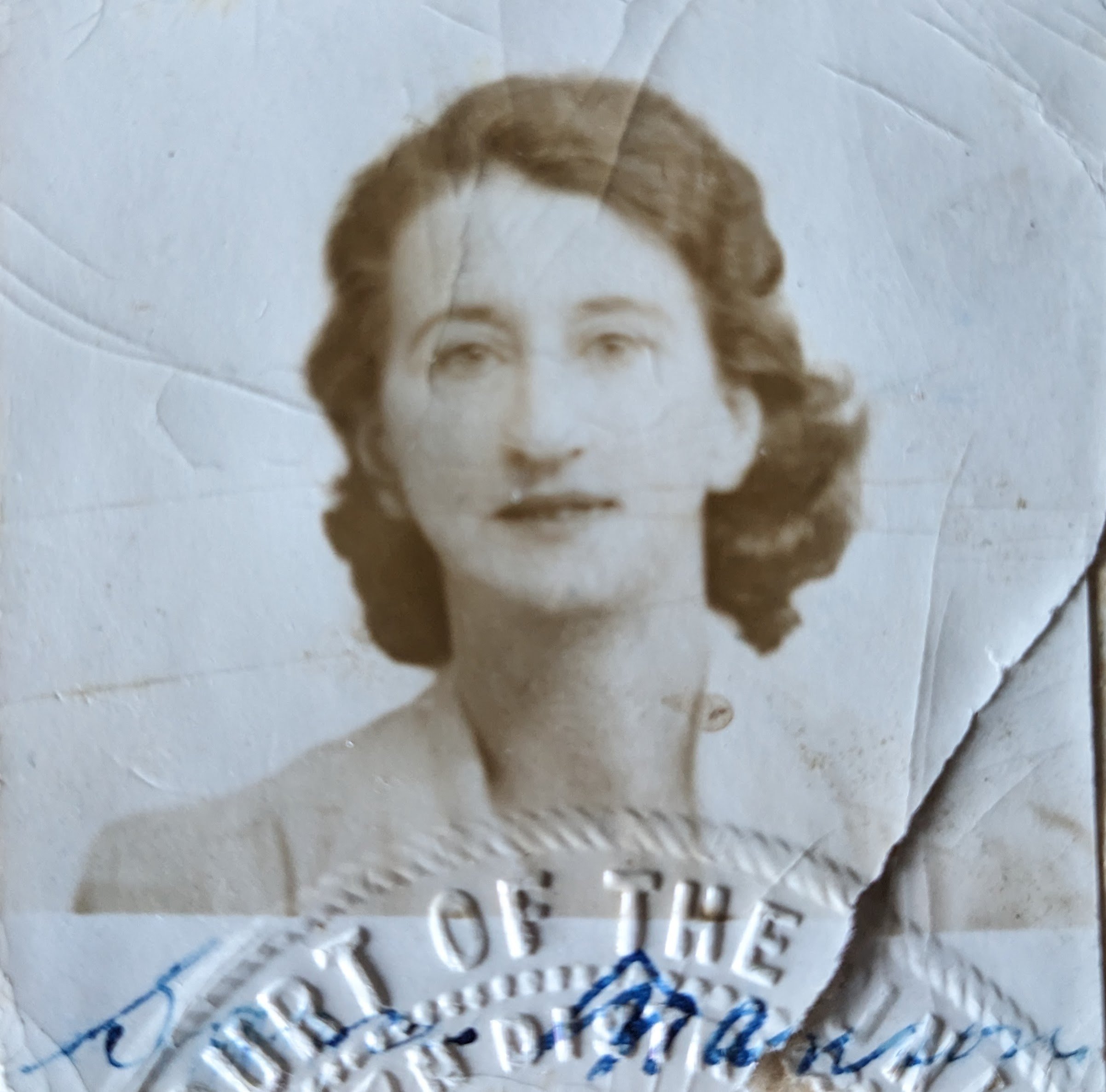
My grandmother Sarah McEvoy was long gone at this point — she came to the US in 1924 — but I wanted to check on the whereabouts of my great grandmother Catherine/Kate in 1926. [As I’ve noted in previous posts, my rebel grandmother was rumored to have been involved in the involuntary demolition of some police offices on the wrong/losing side of the Irish Civil War and left for America shortly thereafter.]
My mom always said that due to a troubled Angela’s Ashes kind of existence in New York in the 1930s, including a wayward husband, my grandmother had active plans to abandon the US and return to Ireland. When Catherine died in 1935, that put paid to those plans, thereby avoiding a Sliding Doors Butterfly efffect inflection point to my own personal history.
But in 1926, Catherine was very much alive, and so I thought I would check her out. She wasn’t hard to find.
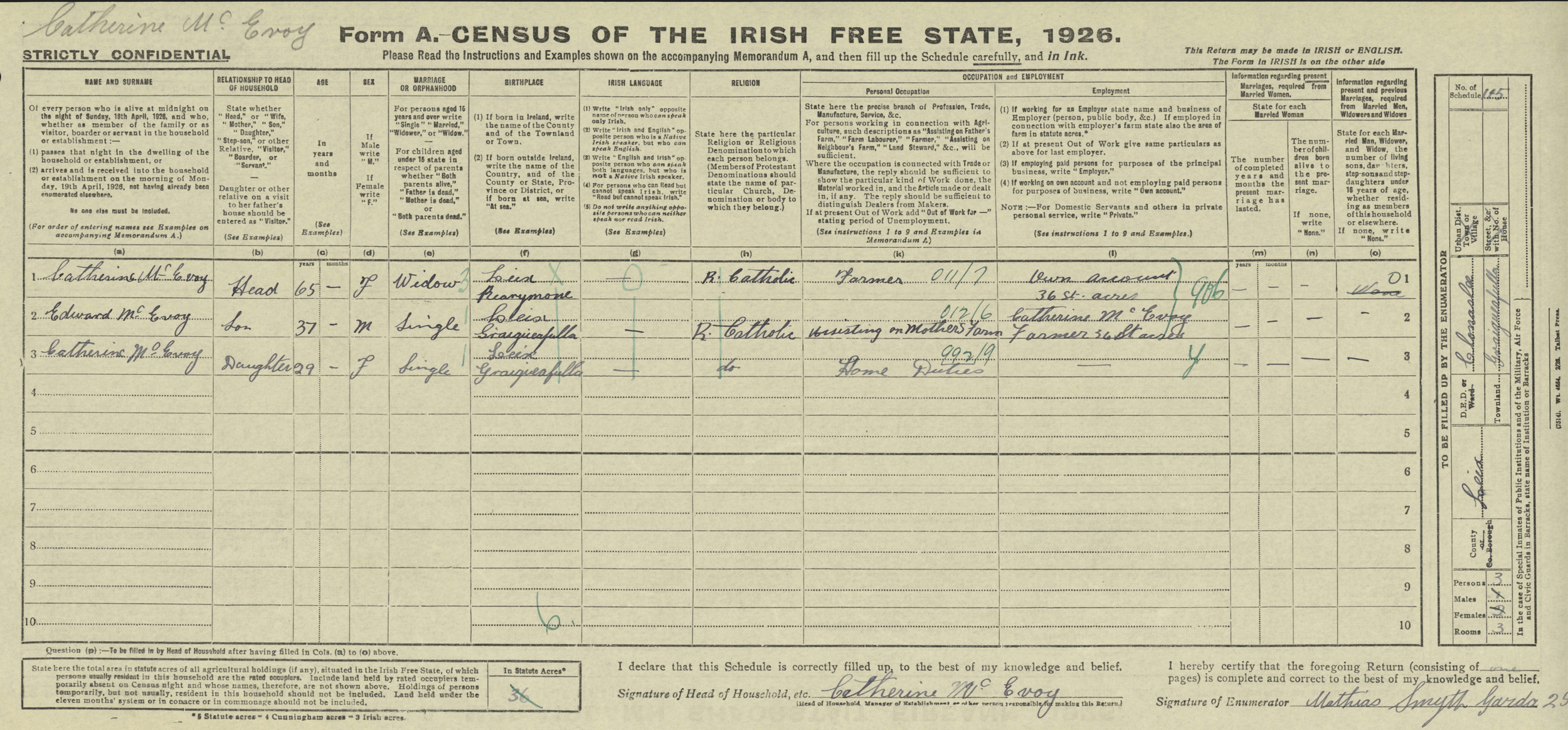
1926 Irish Census
A couple of observations that Claude.AI extracted from this sheet.
The household had 1 male, 2 females = 3 persons total, occupying 3 rooms
All three in the household were Roman Catholic
All spoke Irish and English (bilingual)
Catherine Sr. listed her occupation as Farmer, working on her own account, farming 36.5 statute acres
Edward was listed as assisting on mother's farm
The younger Catherine's occupation was Home Duties
The signed enumerator was Matthias Smyth, Garda (a local police officer)
Catherine Sr. signed the form herself — suggesting literacy
The townland had 17 inhabited dwellings with 76 persons total (41 male, 35 female)
Neighboring households included families named Dunne, Costello, Lawler, Kenny, Conroy, Malone, Maher, Hickey, Rourke — a typical rural Irish community
So how had things changed since the 1901 Census?
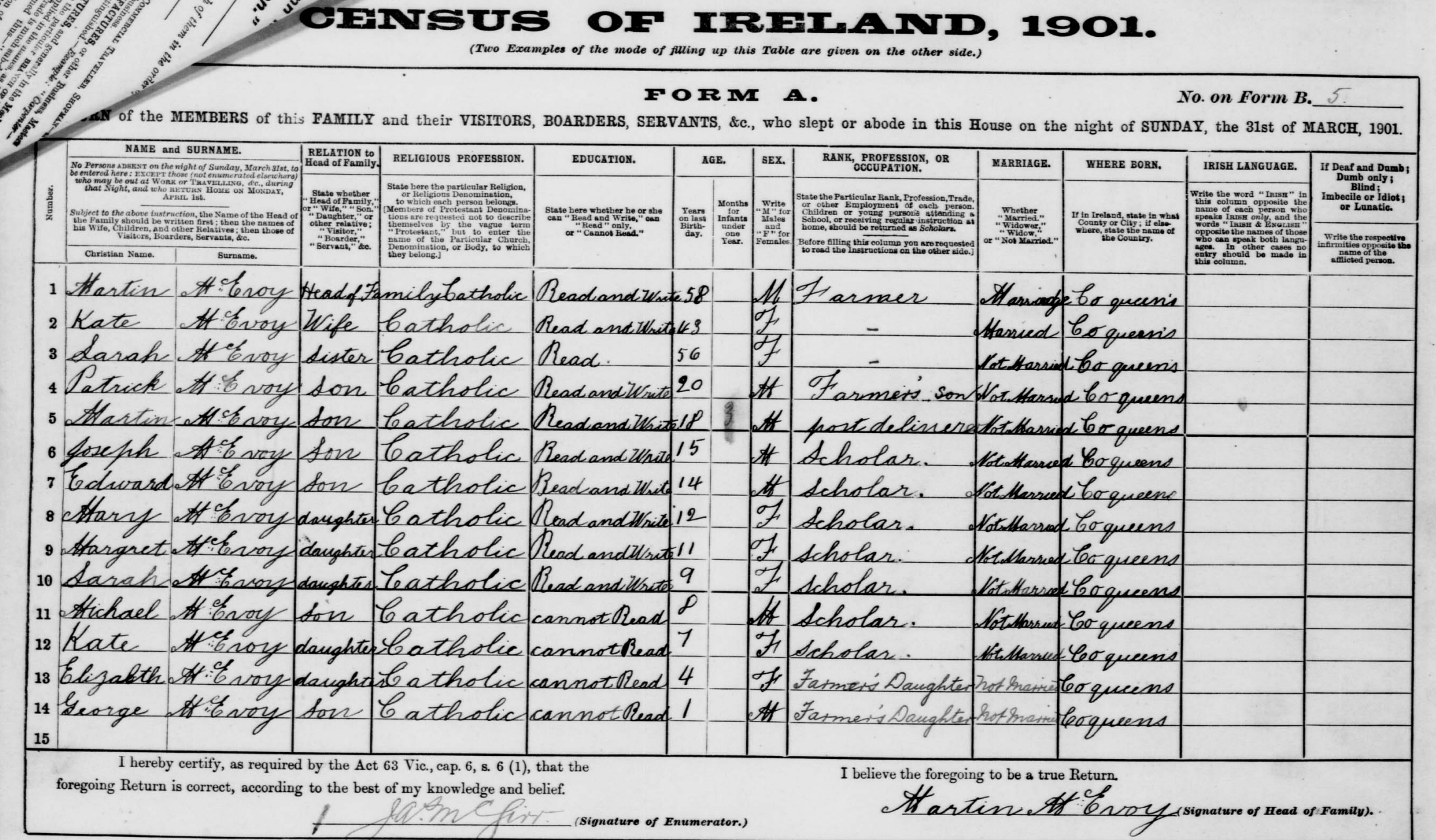
1901 Irish Census
Well, obviously going from a household of 14 to three was quite a shift. There was even a 15th, John, who died at age five from “paralysis” on 2 May 1889. All were in those same three rooms, which begs the question of “How?” and the observation, “Where there’s a will there’s a way.”
What happened to all these people?
Catherine’s sister-in-law Sarah — for whom my grandmother must have been named — died sometime after the 1901 Census and before the next one in 1911.
Her son George (1 year old at the time of the 1901 Census) died on 6 August 1902 at 3 years old from “probably spinal disease and secondary paralysis.”
Patrick, her oldest son, died on 13 November 1905 at 24 from asthma complications.
Margaret left for America on 4 June 1908 from Queenstown (a seaport town on the south coast of County Cork aboard the S.S. Umbria).
Joseph left a year later, 26 August 1909, aboard the S.S. Teutonic.
Mary left in 1912 and eventually married a fellow named Aaron Fleischmann (bet there was some conversation about that!)
Her son Martin remain in Ireland and died in 1913 at age 30.
Her husband Martin died in 1917.
Sarah — fresh from her IRA activities) and Elizabeth left together for the US in 1924. Michael, who had been imprisoned the previous year along with Elizabeth’s future husband for some similar activities, left for the US around the same time.
Edward and Catherine were all that remained of Catherine’s once large family. I wish I could ask my great grandmother how she felt about this. A lot of trauma in one family.
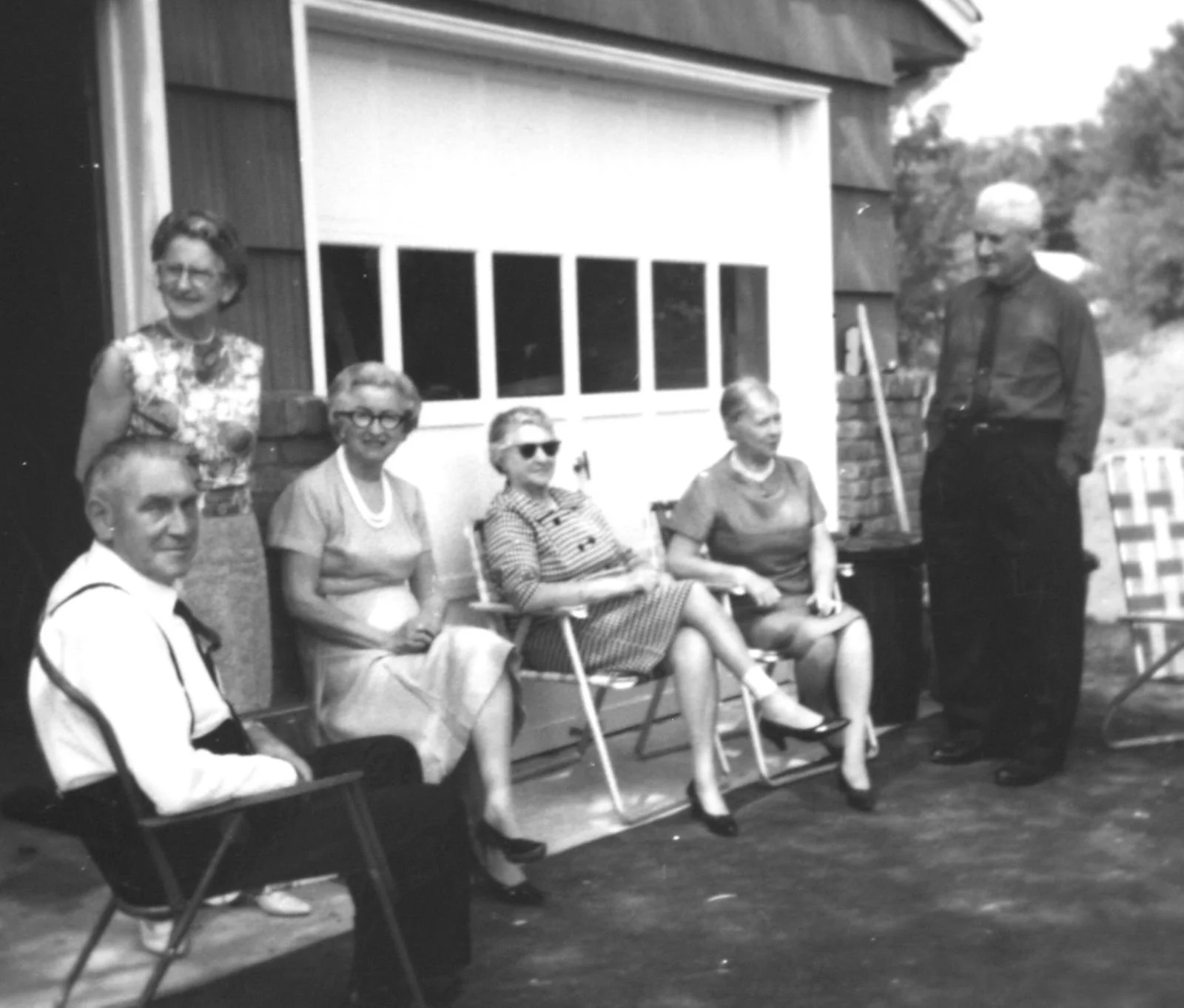
The McEvoy Diaspora, circa 1967