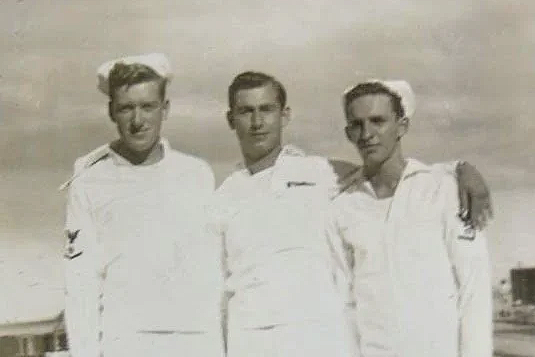
An AI Journey into the Military Service of Joseph John Mancini
So two things.
First, the current "conversation" between Hegseth and Dario Amodei from Anthropic about the future of #AI scares the hell out of me.
Second, the things AI and Claude.AI can do with masses of unstructured information are amazing.
Long ago, I got a big stack of records from the Military Personnel Center about my father’s military service — he was in the Navy from 1944 to 1946. If you haven’t done this for an ancestor, it’s well worth doing. The information you will find out about their service record is fascinating, but the information that can be scraped from enlistment papers and the like can fill in a lot of holes.
All that being said, I just finished taking the stack of papers about my father and scanned them into 5 PDFs.
I imported them into a project in Claude.
I gave this command: Can you create a narrative describing the military service of Joseph Mancini and his service aboard the USS Simpson?
Here’s the output. No editing, no refining, the raw output.
Pretty amazing. And a bit scary.
A Sailor's Service
Joseph John Mancini was born on xxxxxx, in New York City. A young man of eighteen when the United States was already deep into the Second World War, he answered his country's call in the spring of 1944. His military service — modest in its rank but remarkable in its breadth of duty — took him from the streets of New York to the North Atlantic and beyond, aboard one of the U.S. Navy's storied Clemson-class destroyers: the USS Simpson (DD-221/AG-97). What follows is a narrative of his service, drawn from official records preserved in his military jacket and later retrieved from the National Personnel Records Center.
Induction and Enlistment
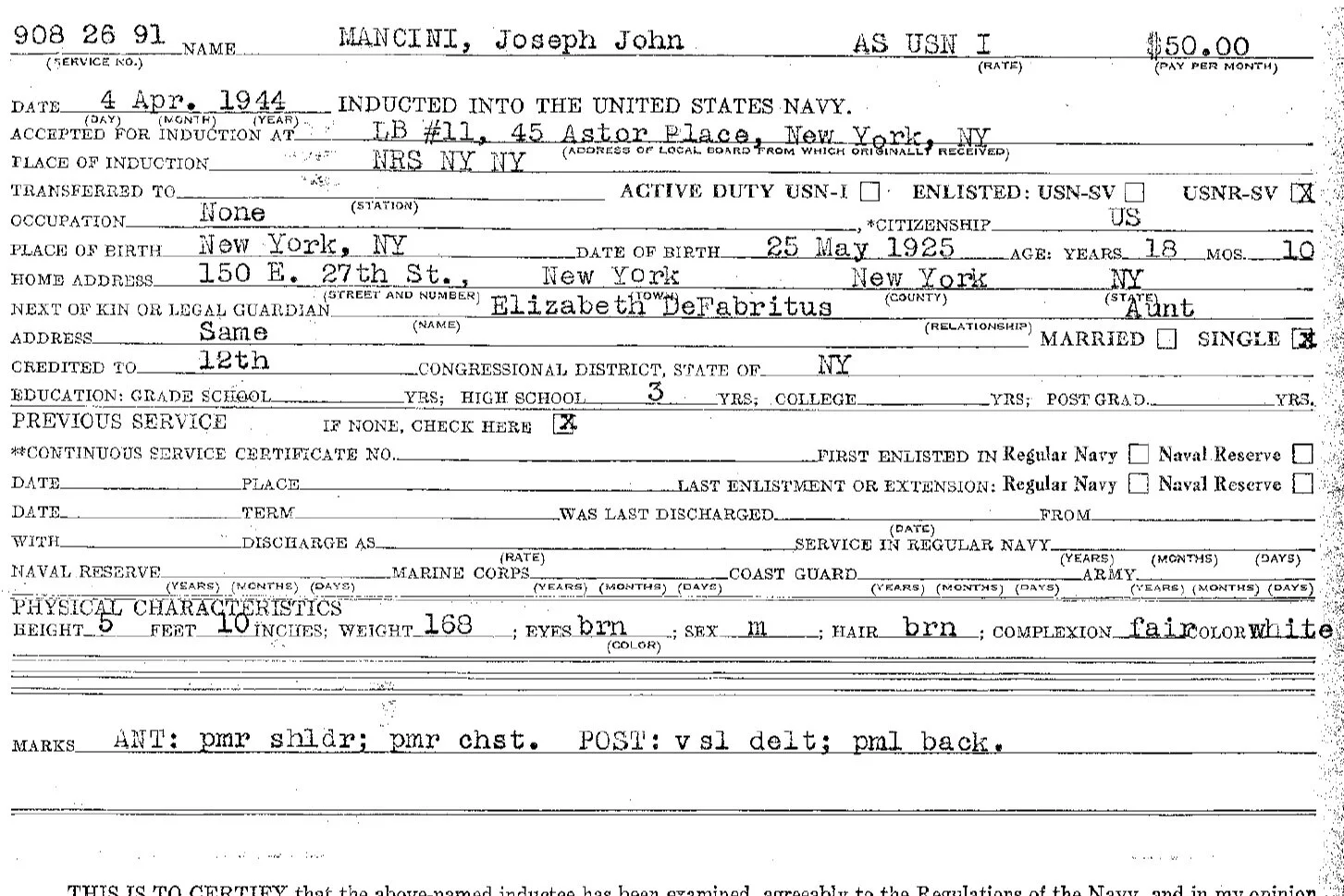
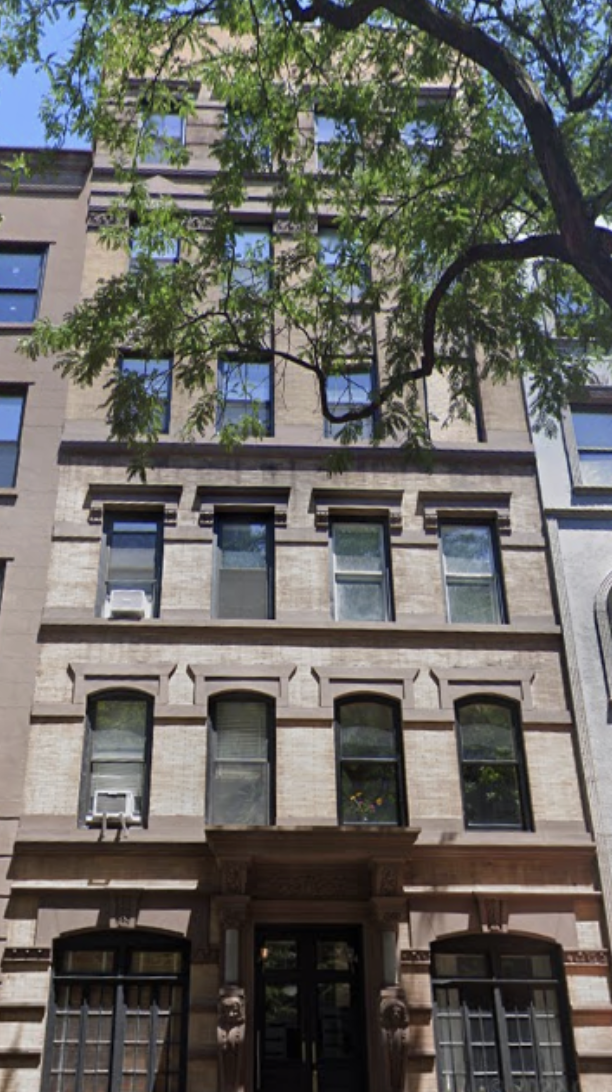
On April 4, 1944, Joseph Mancini was inducted into the United States Navy at the Navy Recruiting Station, 333 Madison Avenue, New York City, under the Selective Training and Service Act of 1940. He was credited to the 12th Congressional District of New York State and formally enlisted as an Apprentice Seaman (AS) in the U.S. Naval Reserve, Class V-6, Serial Number 908 26 91, at a pay of $50.00 per month. He listed his home address as 150 East 27th Street, New York, New York, and named his aunt, Elizabeth DeFabritus of the same address, as his next of kin and primary beneficiary.
Mancini's pre-service background was that of a typical urban teenager. He had completed three years of high school and had held several part-time jobs, including work as a stock boy, delivery boy, and news boy. He had no prior military service and expressed a preference for the Navy. His physical examination found him fit for general military service: he stood 5 feet 10 inches tall, weighed 168 pounds, with brown eyes, brown hair, and a light complexion. He was 18 years and 10 months old at the time of his enlistment.
Basic Training and Advanced Schooling
After induction, Mancini was sent to the U.S. Naval Training Station at Sampson, New York, for recruit training. He qualified in swimming fifty yards and received gas chamber instruction with CN gas. By the end of May 1944, he had successfully completed recruit training and was advanced to the rating of Seaman Second Class (S2c). Shortly thereafter, a training certificate dated December 7, 1944, certified that he had completed the Navy Training Course for Seaman First Class with a mark of 3.63, aboard the USS Simpson.
Following basic training, Mancini was transferred on May 26, 1944, to the Armed Guard School at Norfolk (Camp Shelton), Virginia, in accordance with orders from the Bureau of Naval Personnel. Armed Guard sailors were trained to man guns aboard merchant ships and support convoy operations — a demanding and often dangerous assignment during the Battle of the Atlantic. He reported to the school on May 27, 1944. While at the Armed Guard School, he was initially assigned to Gun Crew #2924 and later reassigned to a maintenance detail. He also passed the night vision test using the Radium Plaque Adaptometer.
After completing his Armed Guard instruction, Mancini was transferred on June 19, 1944, to the receiving station at the Naval Operating Base, Norfolk, Virginia. Within days, he received his permanent assignment: effective June 23, 1944, he reported aboard the USS Simpson (AG-97), where he would serve for the remainder of his active duty.
Aboard the USS Simpson (DD-221/AG-97)
The USS Simpson (DD-221) was a Clemson-class destroyer commissioned on November 3, 1920, named in honor of Rear Admiral Edward Simpson, a Civil War-era naval officer. By the time Mancini came aboard in the summer of 1944, the Simpson was a veteran warship with a long and distinguished history. She had served with the U.S. Naval Detachment in Turkish waters during the post-World War I unrest of 1922–1924, helped rescue hundreds of Americans from the great fire of Smyrna in September 1922, and spent years patrolling the waters of China with the Asiatic Fleet, where she supported American diplomats during the Japanese attack on Shanghai in 1932.
When the United States entered World War II following the attack on Pearl Harbor in December 1941, the Simpson was drawn into the vital work of convoy escort. She had already participated in some of the war's earliest transatlantic convoy runs — including the first westbound convoy escorted by American warships, in September 1941 — and by 1943 was regularly making the dangerous crossing between the Americas and ports in the British Isles, North Africa, and the Azores. She escorted numerous named convoys, including ON 18, HX 154, HX 167, HX 175, HX 182, SC 111, CU 2, UC 3, CU 3, UC 3A, and others, plying the deadly waters of the North Atlantic in defense of Allied shipping.
Mancini's Duties and Assignments
When Mancini reported aboard in June 1944, the Simpson had recently been reclassified and was serving primarily in escort and training support roles along the U.S. East Coast. By the end of 1944, she was escorting new heavy combatant ships — including the battleships USS Wisconsin and USS Missouri, the cruiser USS Alaska, and the aircraft carriers USS Ticonderoga and USS Antietam — on their shakedown and training exercises. It was demanding, often unglamorous duty, but it was essential to readying the Navy's newest capital ships for war service in the Pacific.
Mancini's rate was advanced over the course of his service. He progressed from Seaman Second Class to Seaman First Class (S1c), and by 1944 he had advanced to Yeoman Third Class (Y3c) — a rating reflecting clerical and administrative duties aboard ship, including maintaining records, drafting correspondence, and handling official paperwork. A Navy Training Course certificate dated April 23, 1945, confirmed that he had completed the course for Yeoman Third Class with a mark of 3.54, earning his new rating while serving aboard the Simpson. He later advanced to Yeoman Second Class (Y2c), the rating under which he would be ultimately discharged.
Service records reflect that Mancini was granted a seven-day recruit leave commencing May 11, 1944, and a five-day leave in January 1945. He was serving outside the continental United States as of December 11, 1944 — a status that qualified him for the American Area Campaign Medal — and this is confirmed by a notation in his service record signed by Lt. Commander L.W. Sedgwick, commanding the USS Simpson (DD-221), on December 21, 1944.
The Simpson's Final Years: AG-97
In May 1945, as the war in Europe drew to a close, the Simpson was reclassified as a miscellaneous auxiliary vessel, redesignated AG-97. Her armament was removed, and she was refitted with exercise torpedo racks and a winch for handling towed targets. She was assigned to Guantanamo Bay, Cuba, on June 16, 1945, where she served as a training vessel for nearly a year. Mancini was transferred to the USS Simpson (AG-97) effective May 22, 1945, and continued his service in this new capacity.
A Certificate of Demobilization Factors, dated September 15, 1945, documents that Mancini had been in active duty since April 5, 1944, and had accumulated the following demobilization points toward discharge: 10.5 points for age (21 years at nearest birthday × 1/2), 12.5 points for naval service (25 months × 1/2), and 28.5 points for duty outside the continental United States (22 days × 4.5), for a total approaching the threshold for release. The document noted that he was eligible for discharge upon attaining sufficient points, and that he had no dependents as of 1945.
Honorable Discharge
Joseph Mancini was honorably discharged from the United States Naval Reserve on May 15, 1946, by reason of expiration of enlistment, in accordance with ALNAV 131-46. He did not wish to reenlist. His separation was processed at the U.S. Navy Personnel Separation Center, Lido Beach, Long Island, New York. His final rating was Yeoman Second Class (Y2c), SV6, USNR. He was paid a total discharge sum of $50.91 and received travel and mileage allowance. The separation was signed by E.P. O'Rourke, the discharging officer.
His Notice of Separation from U.S. Naval Service (NAVPERS-553) records the vessels and stations at which he served: Naval Recruiting Station, New York (NRS NY NY); Naval Training Station Sampson, New York; Armed Guard School, Norfolk, Virginia; Armed Guard School Annex, Naval Operating Base, Norfolk, Virginia; USS Simpson (AG-97/DD-221); and the Personnel Separation Center, Lido Beach, New York. His service schools included Recruit Camp Sampson (5 weeks) and Armed Guard School, Norfolk (2 cycles).
Medals and Awards
Joseph Mancini was entitled to two service medals upon his discharge. He received the World War II Victory Medal, awarded to all personnel who served in the U.S. armed forces between December 7, 1941, and December 31, 1946. He also received the American Area Campaign Medal, for service in the American Theater of Operations — reflecting his duty aboard the Simpson along the Atlantic coast and at sea in the western hemisphere. The WWII Victory Medal was awarded in accordance with ALMAV 352945, and a notation to that effect was made in his service record by Lt. S.J. Lappen, USNR, by direction of the commanding officer.
Reflections
Joseph John Mancini's military service spanned roughly two years, from April 1944 to May 1946. He entered as a teenage inductee from the streets of New York, trained quickly as both an armed guardsman and a Navy yeoman, and served his country faithfully during the final years of the most devastating conflict in human history. He did not serve aboard a ship that saw dramatic battle action in these years — the Simpson's wartime convoy duties had largely been completed before he arrived — but his service was no less real for that. Every convoy run, every shakedown cruise, every administrative function performed at sea contributed to the vast American war effort.
He also served aboard a ship with a remarkable history. The Simpson had been to the Near East, to the fires of Smyrna, to the rivers of China, to the icy convoy routes of the North Atlantic. By the time Mancini stepped aboard, the old destroyer was near the end of her service life. She was decommissioned on May 11, 1946 — just as Mancini himself was being discharged — and struck from the Navy list on June 19, 1946, before being sold for scrap to Northern Metals Company in Philadelphia in November of that year. Sailor and ship completed their service at nearly the same moment, each honorably concluding a long and faithful duty to the nation.
These records, preserved for decades and retrieved from the National Personnel Records Center at the request of his family in 2019, stand as testimony to one man's quiet contribution to American victory.
Service Summary
Full Name: Joseph John Mancini
Service Number: xxxxxxxx
Date of Birth: xxxxxxxx — New York City, NY
Date of Induction: April 4, 1944
Place of Induction: Navy Recruiting Station, New York City
Branch: U.S. Naval Reserve (USNR), Class V-6 (SV)
Final Rating: Yeoman Second Class (Y2c), SV6
Ratings Held: Apprentice Seaman (AS), S2c, S1c, Y3c, Y2c
Primary Station: USS Simpson (DD-221 / AG-97)
Date Reported Aboard: June 23, 1944
Date Discharged: May 15, 1946
Place of Discharge: USN Personnel Separation Center, Lido Beach, NY
Character of Discharge: Honorable — Expiration of Enlistment
Medals & Awards: World War II Victory Medal; American Area Campaign Medal
Home Address at Service: 150 East 27th Street, New York, New York
Next of Kin: Elizabeth DeFabritus (Aunt), same address
Sources
Military service records of Joseph John Mancini (SN xxxxxxx), retrieved June 25, 2019, from the National Personnel Records Center, St. Louis, Missouri (Request No. xxxxxxxxxx). Records include induction and enlistment papers, transfer records, advancement certificates, leave records, campaign medal notifications, Certificate of Demobilization Factors, and Notice of Separation (NAVPERS-553).
USS Simpson (DD-221): Ship history documentation, including service history and convoy table. Project files.