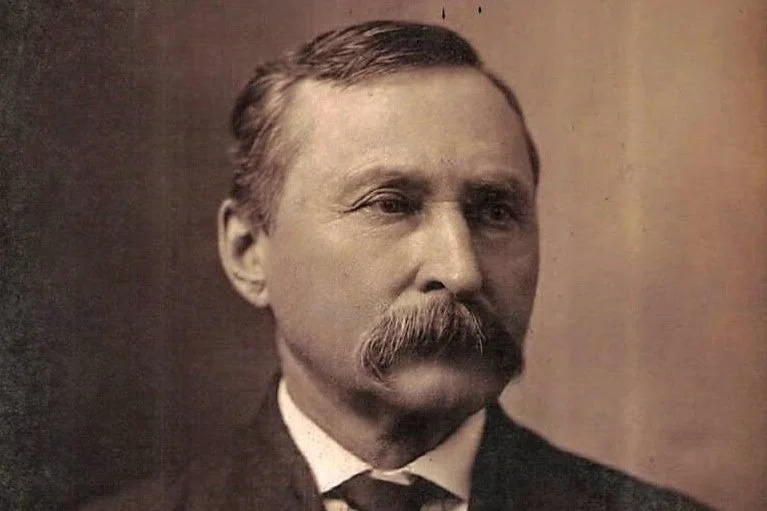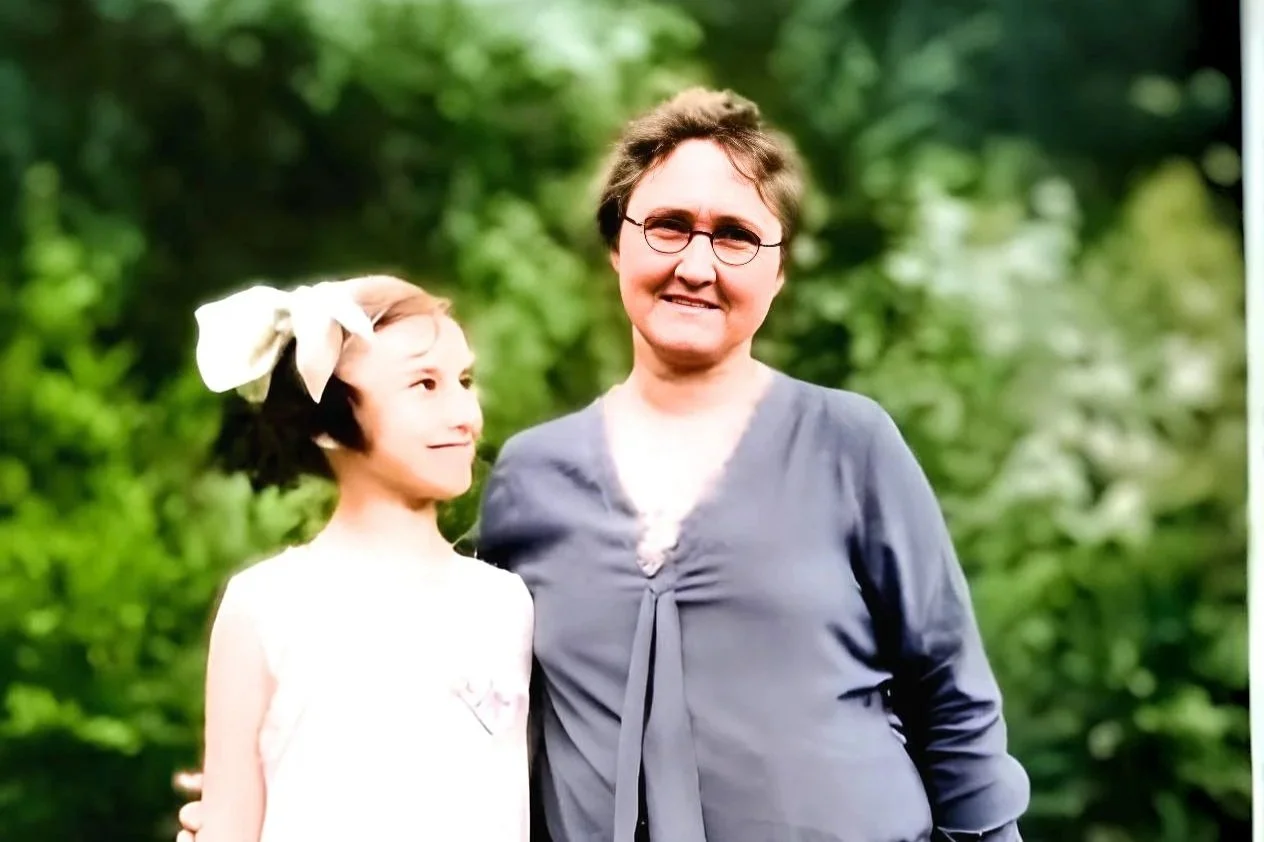
Nannie Watkins Davis (1850-1902)
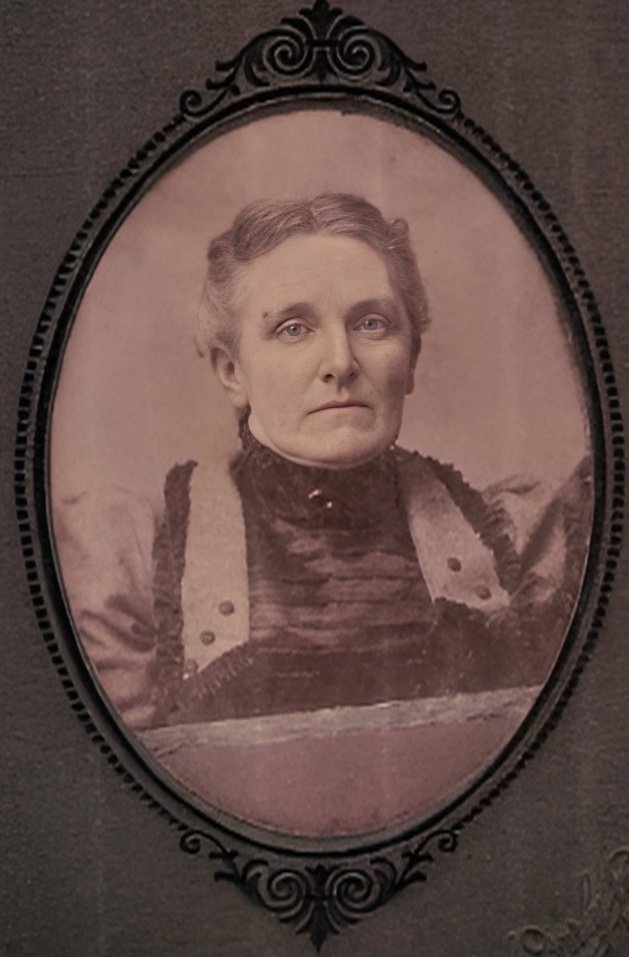
Nannie Watkins Davis was my wife's great-grandmother and the wife of James Polk Stull (1845-1911). She lived her entire life in Christiansburg, VA. She was one of three sons (William-b. 1841, Eldred-1843, and Abraham-1854) and four daughters (Mary-1839, Jane-1845, Cynthia-1848, and Euphemia-1850) of William A. Davis (1817-1900) and Euphemia S. Baylor (1818-1910).
Nannie married James Polk Stull on 19 May 1870 in Christiansburg and settled there. James worked in a store owned by his sister and brother-in-law.
Nannie and James had two children who lived, James Eldred (1878-1944) and my wife’s grandmother, Mary Elizabeth (1880-1951). According to my mother-in-law, they had two children – a first son and a second daughter – who did not survive. I can’t find any birth records for them.
One of the things that always brings me up short when looking at old family history records is how fragile life was, how “personal” death was, and the role that letters played in providing family links in a pre-phone, pre-email era. I have a transcript of a December 1882 letter from Nannie to her sister Jane, whom they called Jennie. Jennie and her family were living in Missouri. The letter discusses an illness facing Jennie’s nine-year-old daughter, Mary Effa. A few excerpts:
Ma [Euphemia Baylor Davis] received your kind letter last night with the sad intelligence of dear Effa’s illness. We were sorry indeed to hear she had been so sick; do hope ere this reaches you there will be a big change for the better. Ma told Dr. Wilson about Effa and he told her he would give her a prescription to send you. Mollie Montague’s bowels were in the same condition as you described Effa’s and Dr. William cured her. He says for you to show the prescription to your physician; hope it will be the means to restore her to perfect health.
I would be so much obliged for one of dear Effa’s photographs, will have it framed…Our children are well and growing rapidly and send many kisses to your little ones. Kiss darling Effa many times for us all. We do hope that she will be much better ere this reaches you.
Oh how I wish I could come and be with you to help you nurse your darling child. Keep her in good spirits and don’t let her see you in distress for it may influence her. Come out next summer!
The letter includes an addendum from Euphemia Baylor Davis. [64 years old at the time but sounding much older – and sounding like a grandmother.]
I feel very much distressed about dear Effa. I suppose you have tried all these things, but please put mustard poultices on her if she complains about soreness and rub her spine. Dear Jennie, try to put your trust in God for He does all things, although we can’t see the end from the beginning and can’t know it is so.
The rest of the letter is a recitation of all sorts of deaths and medical problems impacting family and mutual friends, with a surprising number of issues surrounding "bowel conditions." Doing a bit of searching, I discovered that gastrointestinal infections – often the result of typhoid, cholera, and dysentery – were a top cause of death in the 1880s. Improvements in the water supply, sanitation, and antibiotics that would significantly reduce these death rates were still decades away.
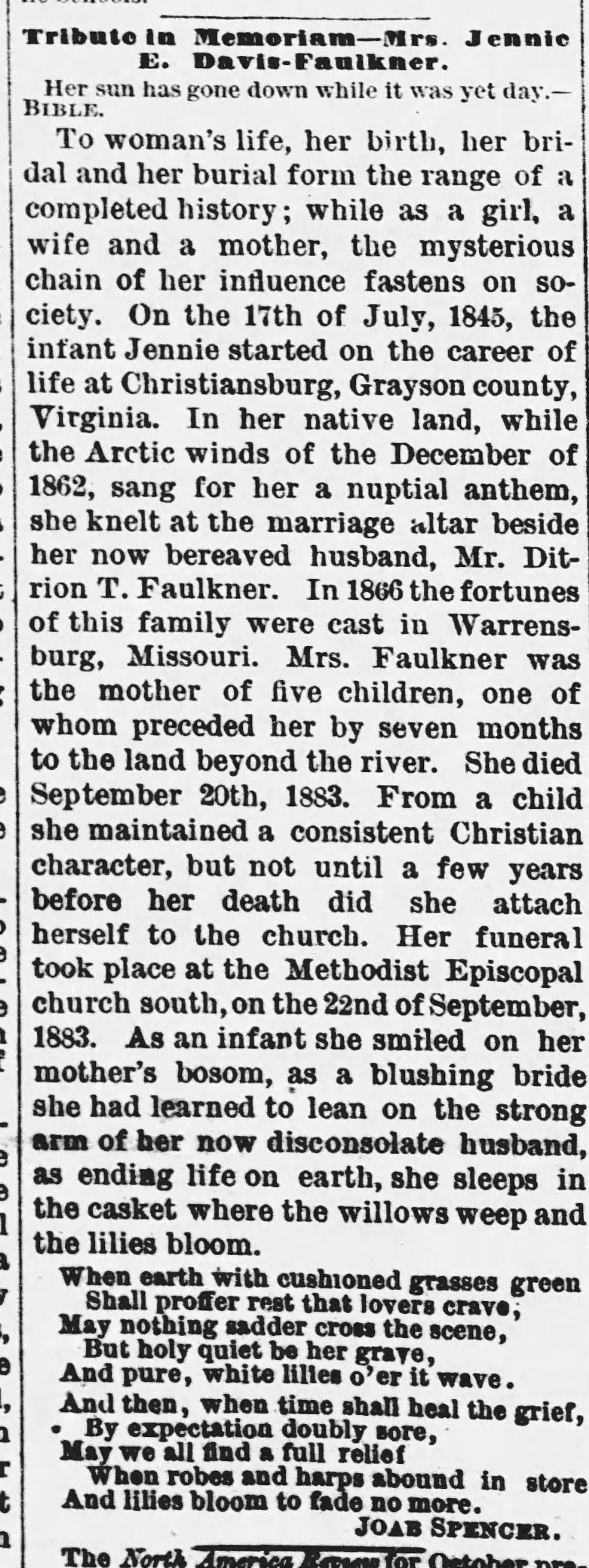
Nine months after the first letter, I discovered a transcript of another letter from Nannie to her brother-in-law. Not only had Effa died in the intervening months (11 February 1883), but also her mother, Jennie (20 September 1883).
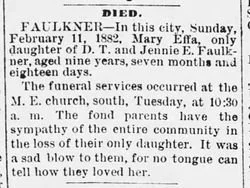
Nine months after the first letter, I discovered a transcript of another letter from Nannie to her brother-in-law. Not only had Effa died in the intervening months (11 February 1883), but also her mother, Jennie (20 September 1883).
Pa received a letter telling us that darling Jennie was so much worse and just before that, we received the heartfelt news that our darling, precious sister was no more. If we had any such thought that our precious one was so near death. Ma would have been with her long, long ago. Ma had her trunk packed and intended to start Tuesday and if only you had telegraphed Ma might have gotten there in time. Only to see her die.
I am unsure why Jennie and her family moved to Missouri, but there was a desire to return her remains and Effa’s "home." The letter is not only very sad to read, but also a testimony to the "personal" nature of death in the 1880s, with no outsourcing of death to funeral homes.
The weather has been getting cool and you could bring her and Effa so easily and have them interred in our family cemetery where we could visit them. It belongs to us and can never pass into other’s hands. Ma and Pa are so anxious to have you bring the remains home; it would be such a comfort to us all. Please let us know immediately and we will have all preparations made. Have the body bathed in saltpeter water; it is a good disinfectant. Nora Craddock was kept a whole week by saturating a cloth in hydrated lime and put over her face and she look perfectly natural. Please come. Kiss the children for us all.
Yes, a bit hard for modern ears. And I am unsure why Christiansburg folks would have precedence over Jennie's husband and surviving four children back in Missouri.
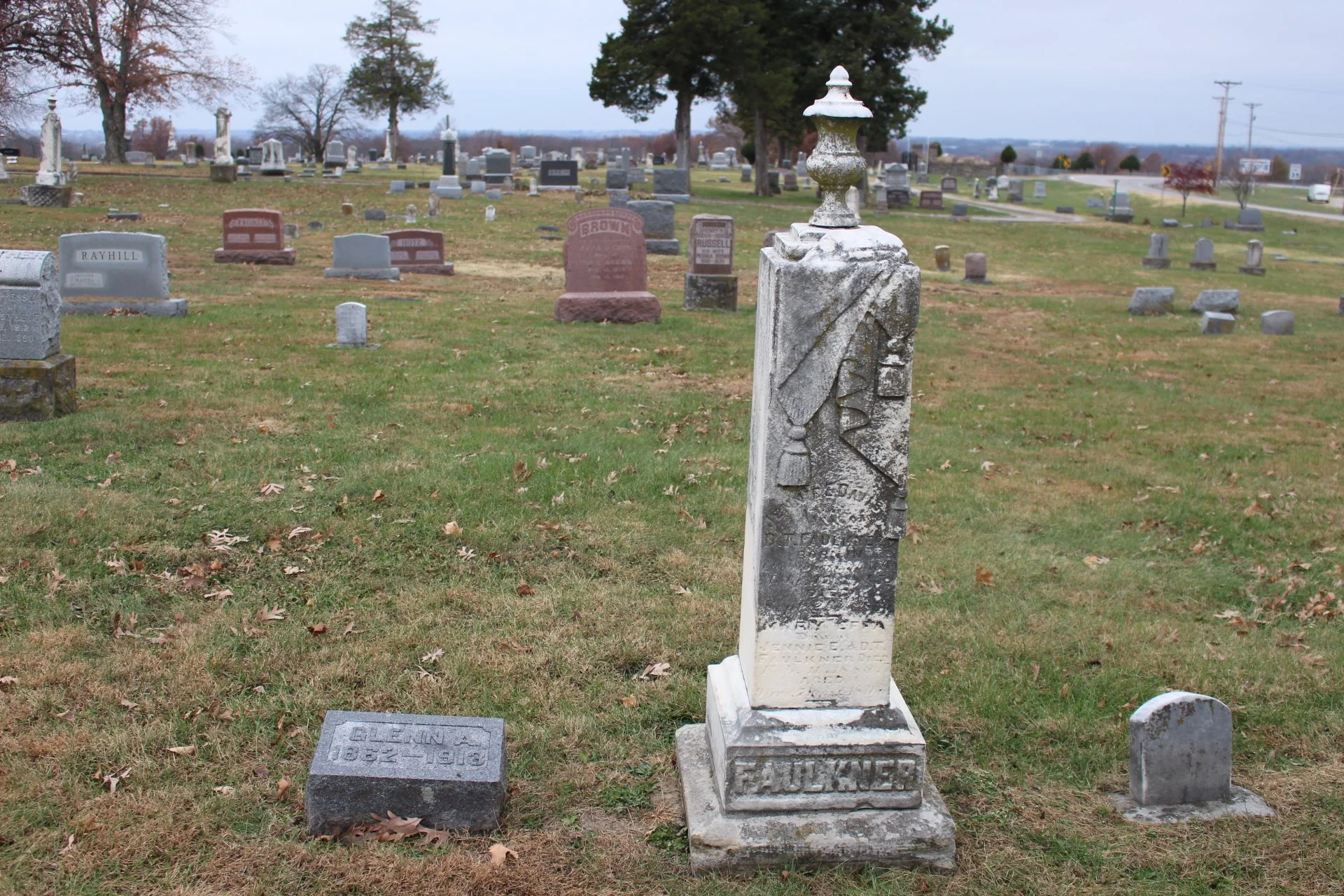
Jennie, her husband, and her children are buried in Sunset Hill Cemetery in Warrensburg, Missouri. [Note: Image on the front of this post is from Jennie’s grave, not Nannie’s]
70ish: Lessons Learned is available in paper ($9.99) and Kindle ($2.99) on Amazon (https://www.amazon.com/70ish-Lessons-Learned-John-Mancini/dp/B0DV5GDMC9).
Immigrant Secrets too — https://www.amazon.com/Immigrant-Secrets-Search-My-Grandparents/dp/B0B45GTTPP.