Panning for Gold circa 1935
Over the years, we used to hear about Sal’s (my mom) Wild West days in the 1930s, panning for gold. This was likely all triggered by both some financial despair in NYC and my grandfather’s deep-seated appetite for risk. Fortunately, my sister June sat down with Sal and asked her about them and recorded her. (Reminder to everyone, record your parents’ histories before it’s too late). I edited my mom’s comments a bit, but here you go.
We were gone for six months, so we left six months before September. Six months before September would be what—April, May, June, July, August, September—probably April or May.
My father had all these different interests all over. Of course, he thought he was going to make a fortune on everything. He really believed it. He was a very smart man, but he was just delusional in a way. He decided we should go out west.
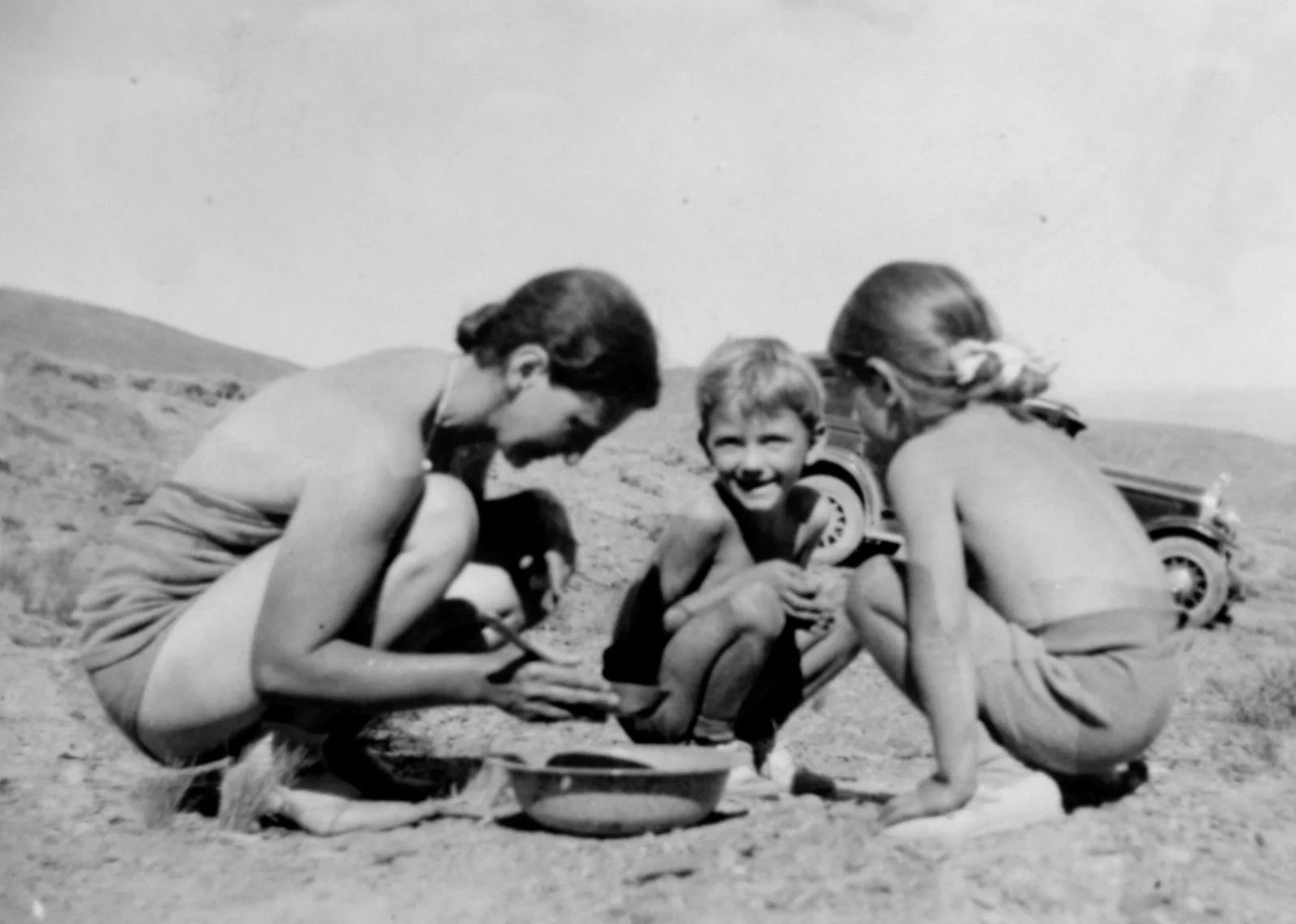
The car wasn't big. It had a front seat, and it probably had a second seat, and then there was the rumble seat in the back, which Doug and I loved to sit in because it gave us a bit of freedom. I'm not positive that we did that all the way. We wanted to see Pike’s Peak in Nevada, so we said that we were heading for Nevada. [It’s actually in Colorado.]
To get up to Pikes Peak, you had to go on a circular roundabout road that just wound around the mountain. I can remember it so well. On the way up, my mother felt sick. So my father pulled over as far as he could, which was practically nowhere, because there was only one lane. So if somebody were coming the other way, we would be dead. When she felt that she was going to be sick, he stopped the car, and she got out, and she threw up. I guess she felt better after she threw up, because she got back in the car and continued our journey to the top of Pike's Peak. I can remember throwing snowballs in July, or at Pike's Peak.
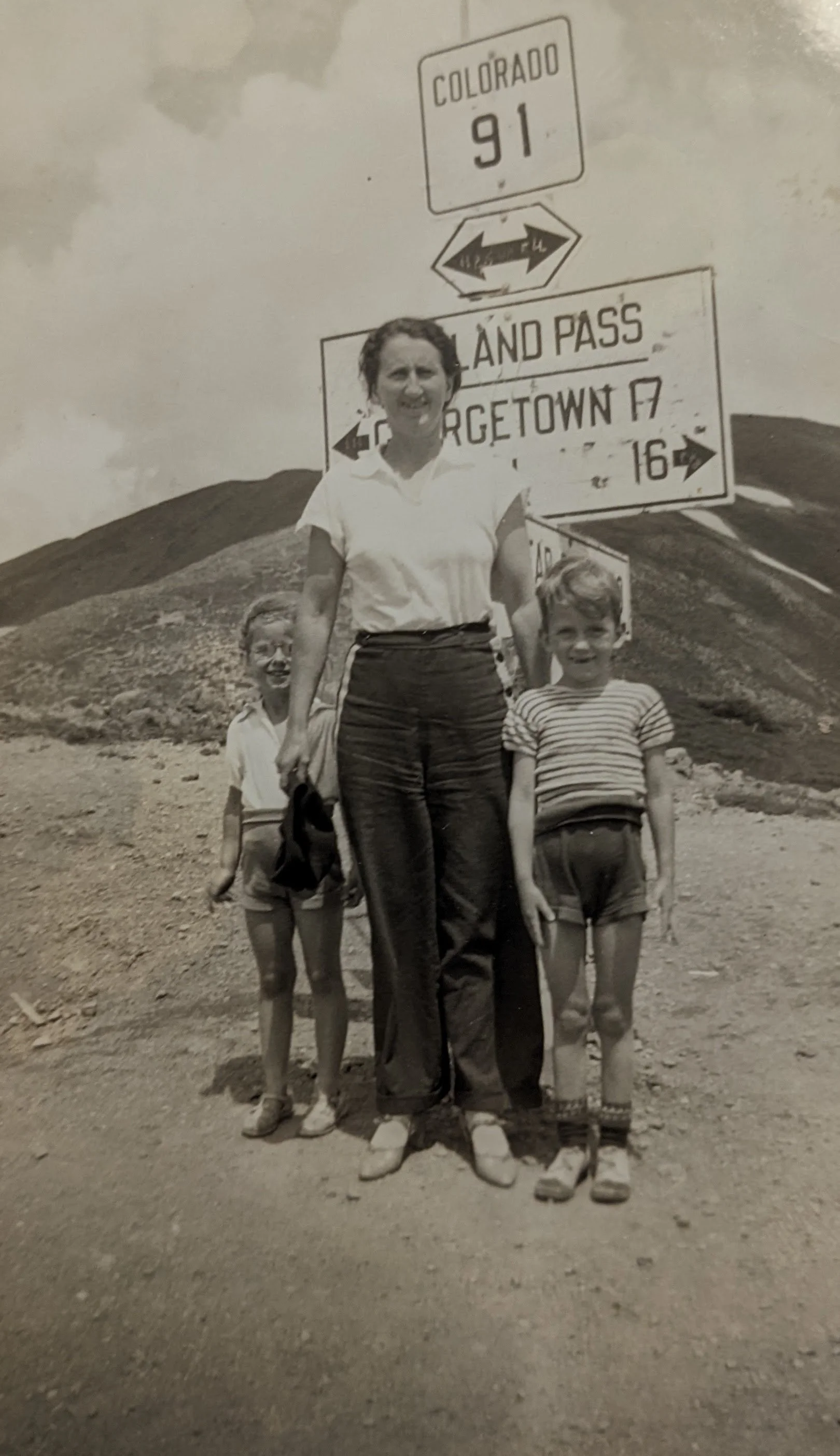
And then we got to Nevada, and apparently my father knew where he was going because we didn't get lost in any big way. I don't know how it happened, but there was a house in the desert that a friend of his, or a corporation, or something had built. It was just a wood-frame cottage, very rustic. And so the plan was that we would stay there. We would live there for about six months. We got out and looked at the place, and it was very rustic. It was in the middle of nowhere. There was no furniture in the cabin; we just unrolled and rolled sleeping bags.
I guess my father had gotten some information from people about things to watch out for. We found out that every night we had to burn the bushes around the cabin because snakes lived in the bushes. So rather than let the snakes scare us, they burned the bushes and burned the snakes. I guess the snakes either died in a fire or went to another bush or something.
I don’t remember my mother cooking in the desert. But a very clear memory is that she brought a wooden baseball bat with her from New York. She kept the baseball bat outside the front door of this cabin. At one point, Doug picked up the baseball bat, swung it, and broke this huge bottle of water, water that was supposed to last us for months.
She said, "Doug, what did you do?” And she took the bat by the handle, reached back, and she flung it. The funniest part of the whole thing was when she picked up that bat -- and you know they're heavy, those bats are heavy – she threw it so far. She was so furious. She was furious, so when she picked it up and flung it, I mean, I had never.
We never found it, because it was desert. It was desert all around, and you wouldn't want to go too far from your cabin because you could either get lost or you could get bitten by a snake or all sorts of other things.
We did pan for gold. You would get a rock and break it up because the gold was supposed to be embedded in rock. You had to break off rock to see if there were any veins of gold.
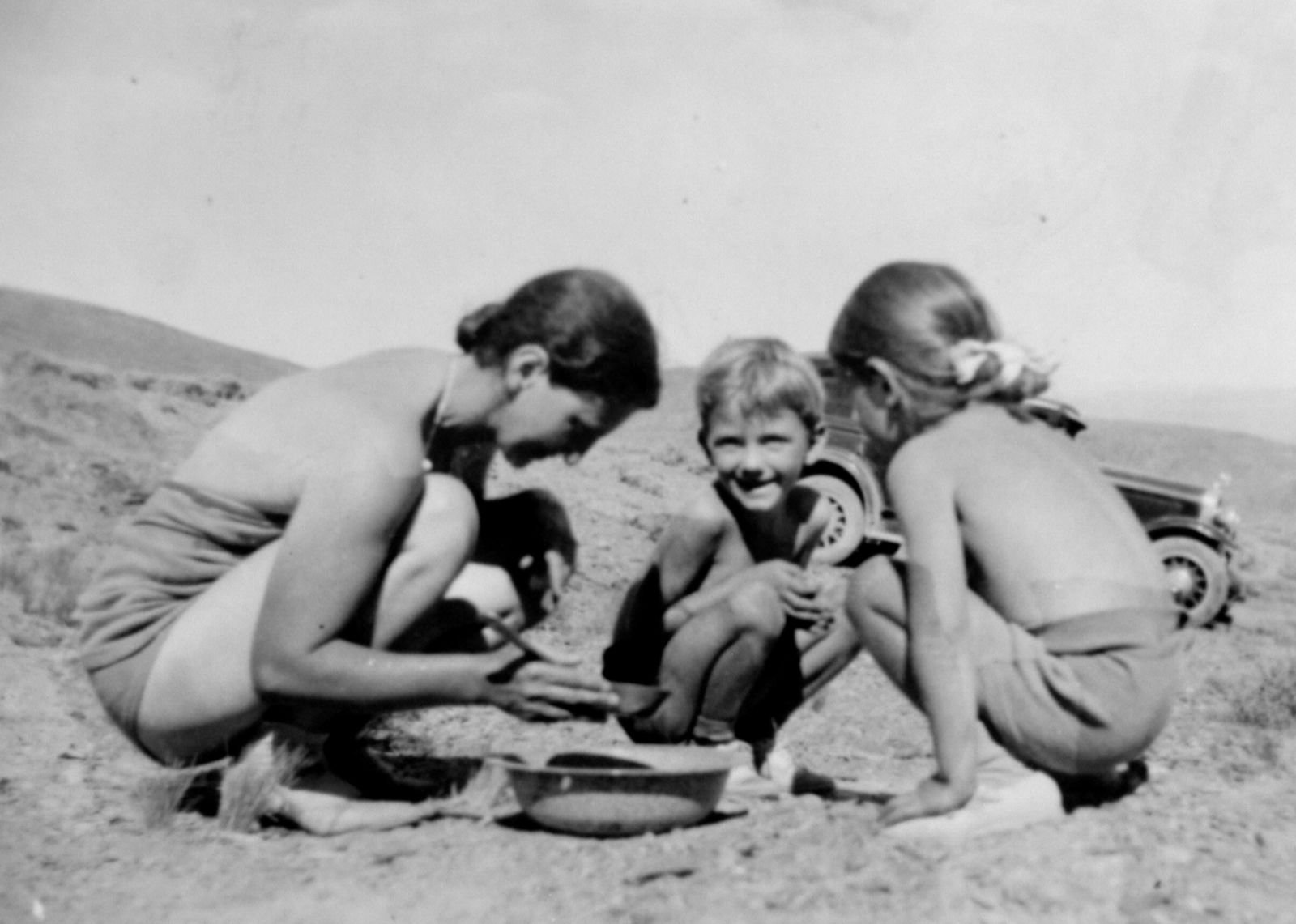
We never found any. He thought he did at one point. He sent a letter to whoever in Nevada handles that kind of thing. He was told that somebody else owned the cabin. We didn't have ownership of the cabin, so even if it had been pure gold, we wouldn’t have gotten anything out of it.
My father was constantly on the go. I don’t have a specific memory of him leaving, but I think Jack was there for a few nights. I am not sure how Jack got there. I think he was on the West Coast at the time, and the West Coast to Nevada is not too far.
When we got back to New York, it was time for Doug to start school. My mother went to register Doug for school, and everything was going fine. The nun had his name and his date of birth—which, of course,, was wrong anyway, but she didn’t know. And the nun said to my mother, "What are you going to do with her?” Because I was a year younger.
And my mother said, "Well, she'll be coming next year because there's a year difference.” And the nun said, "Let her come now.” I was smart enough that I kept up with everything and all like that. But it sure was interesting.
We didn't have much. You know, they hadn't been married very long. I mean, Doug was six, so they'd been married just a little over six years, and the bloom was still on the rose, so to speak. I think he was very good to us. And I remember we played ball. We had a ball and a bat. We played ball with my father, and when Jack was there, we played with Jack, because my mother didn’t catch very well.
I wasn't particularly fond of animals. I remember we were trying to think of a password for something recently. This was maybe a year ago. You said they would ask questions if I forgot the password, like, “What’s your favorite animal?” And I said, “None.”
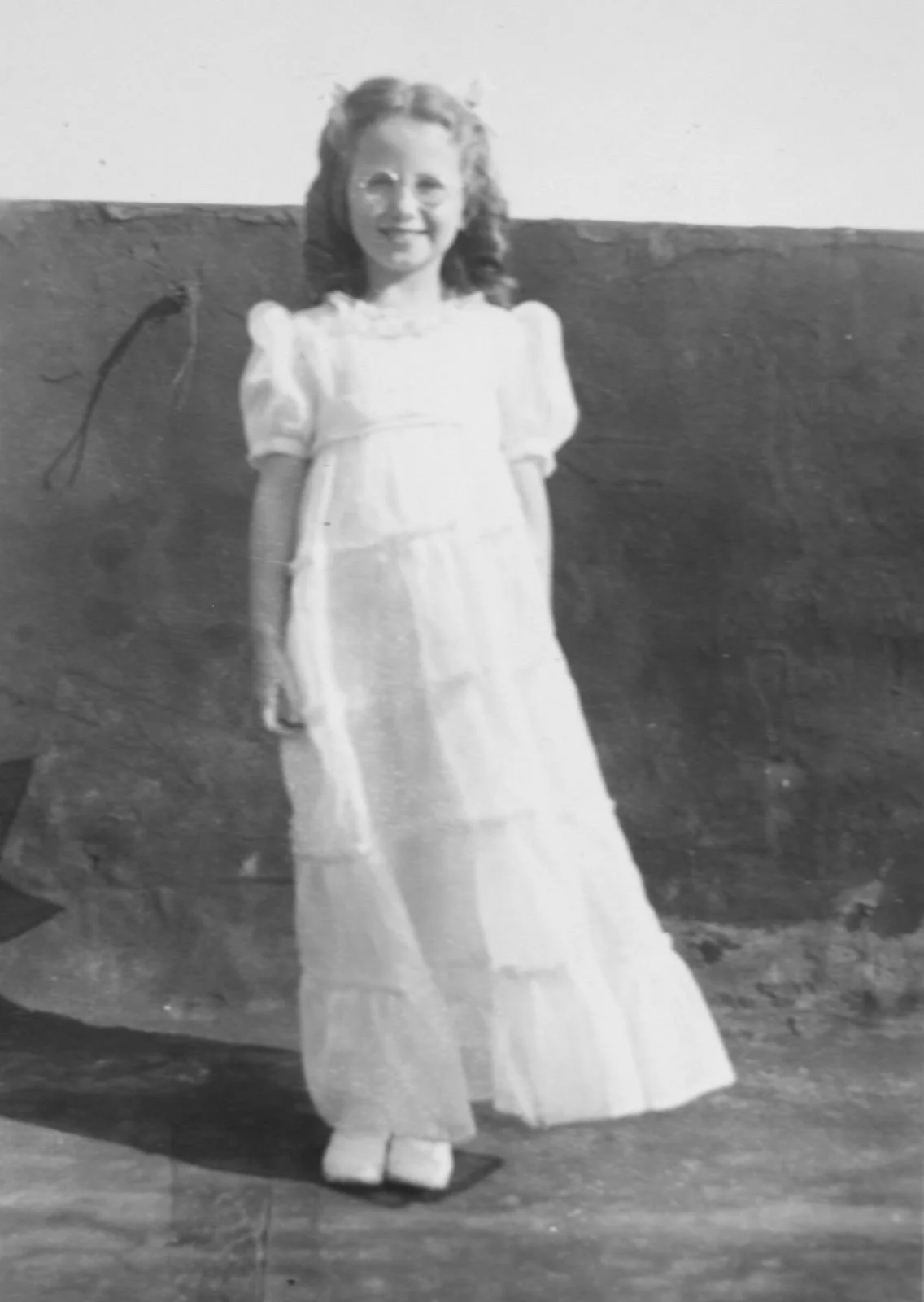
I have a picture of my first Holy Communion. Doug and I had our first communion on the same day because we were both in the same grade. There was anyway. There was a very nice picture of the two of us, and Doug had a suit on because that's what the first graders and kind of first graders with first communion wore, and I had a long dress.