Immigrant Secrets - Chapter 2
This is the THIRD of a series of Excerpts from Immigrant Secrets, the story of how I solved the mystery of my lost grandparents.
It would make a great holiday gift for someone who is interested in history or genealogy or really anyone who just likes a good mystery. I hope you’ll give the book a look.
Purchase link - https://www.amazon.com/Immigrant-Secrets-Search-My-Grandparents/dp/B0B45GTTPP.
——-
TWO
Every year at Cape Hatteras, I go on a bike ride along a somewhat fixed path, one that goes first to the Cape Hatteras lighthouse, past a tiny World War II British cemetery, and from there to a National Park Service campground immediately prior to Beach Access Ramp 43. There is a mile-and-a-quarter road that rings the campground, and at the end of my ten-mile campground velodrome, I head back north toward Route 12. But I first ride out an abandoned road that goes about a third of a mile, almost to the dunes.
On this day, at the end of the abandoned road, I arrived at what I somewhat jokingly refer to as my own meditation point, mainly to hide my routine from those who might think me nuts or overly religious (even though, truth be told, I tend to be both). I paused and looked around at the gray bones of trees long dead from ocean over wash and gathered my thoughts.
I reflected a bit on the fact that I had now officially lived one day longer than the 22,834 days accorded to my father. I realized that I was now officially in uncharted territory. The statute of limitations on being your father’s son never quite runs out, but it certainly takes on a different feel once you live longer than he did. It was in that moment that I decided to see what I could find out about my father’s parents.
Before I dove into the task of finding my mysterious paternal grandparents, I decided it might be best to sharpen my skills by researching and writing down what I knew about my mother’s parents. My maternal grandmother, Sarah McEvoy, was the only grandparent I ever knew personally, and she was quite a piece of work. I activated my Ancestry.com account and plunged in to see what I could add to what I already knew about her story.
My grandmother was born on 4 February 1892 in a town-land called Graigueafulla, in Clonaslee district in Queens County, which was rechristened Laois County after British-themed place-naming became somewhat unfashionable.
I found Sarah in the 1901 census in Ireland. It was good here to have some sort of verification of her age, because my great aunts and grandmother had a notorious habit of lying about their ages. This tended to have a somewhat cascading effect on everyone else’s ages since they were all bunched so closely together. And Sarah’s name was not the only one to show up. There were a baker’s dozen plus one of McEvoys that made their presence known in the 1901 census: father, Martin; mother, Kate; Martin’s sister Sarah; and kids: Patrick, Martin, Joseph, Edward, Mary, Margaret, Sarah, Michael, Kate, Elizabeth, and George. One sibling, John, died at age five from “paralysis” on 2 May 1889 before Sarah was born.
I wondered how all these kids were conceived when I looked at the secondary census form. According to that form, their house had three rooms and three windows in the front of the house, so privacy for these fourteen people must have been a somewhat comical concern. But I guess where there’s a will, there’s a way. They also had a stable, a cow house, a piggery (cool name), and a chicken coop.
By the time of the 1911 Irish census, things had changed a bit. In terms of the animals, things were looking up. There was a stable, but now there were two cow houses, one for cows and one for calves, and three piggeries. I’m not sure how that breaks down into actual pigs. Plus, they had two chicken coops, a shed, and a barn. The animals were living high.
Not so good on the human side. The number of people in the house in 1911 was down from fourteen to eight: father, Martin; mother, Kate; Edward; Mary; Sarah; Michael; Kate; and Elizabeth.
What happened to the rest of them?
Sarah’s aunt, for whom she must have been named, died sometime between the 1901 census and 1911 census.
Sarah’s little brother George (one year old at the time of the previous census) died on 6 August 1902 at three years old, probably from spinal disease and secondary paralysis.
Patrick, the oldest in the family, died on 13 November 1905 at twenty-four from asthma complications.
Sarah’s older sister Margaret left for America on 4 June 1908 from Queenstown (a seaport town on the south coast of County Cork aboard the SS Umbria).
Her brother Joseph left a year later, 26 August 1909, aboard the SS Teutonic.
Still to come, her brother Martin would die in 1913 at age thirty.
Fast-forward a bit, and I found Sarah on the deck of the SS Adriatic in 1924 headed for America. Sarah, traveling with her sister, Elizabeth, arrived in the US on 17 November 1924. At some point in the next few years, Sarah wandered to Florida.
I’m amazed at this degree of mobility for a newly arrived immigrant in 1920s America. Sarah and John Oliver Manson were married at St. Anthony’s Church in Ft. Lauderdale on 13 November 1929. Astute examiners of the marriage license application will note three things: 1) My grandmother’s occupation is listed as nurse, something I had never heard before; 2) They claimed that neither of them had ever been married before. This was perhaps to expedite the marriage by a Catholic priest, since divorce was still forbidden at that point; and 3) The spelling of both her first name (listed as Sara) and last name (listed as McAvoy) was apparently a variable thing.
My mother grew up in what would today be called a single-parent household, but back then they probably had some sort of other label that was not terribly attractive. I am not sure where everyone thought her father—my grandfather John—actually was, but he sure wasn’t with the rest of the family.
My grandfather John was born in Sweden and evidently lived there through his early teenage years. Inexplicably, he seems to have always claimed Melbourne, Australia, as his birth-place on official documents once he got to the United States. I have no idea why. Family lore has it that he sailed around the world seven times. His mother died when he was two. He seems to have had three sisters, all of whom died before him. He somehow wound up in Rio at the age of seventeen, where he contracted yellow fever. He was accidentally shot in the left side in South Africa in 1898, perhaps in the Boer War (the Australians fought on the side of the English).
At one point my grandfather was well known in Florida as a sea captain. He was the winner of a famous Miami to Key West boat race, a race that his own son (my Uncle Jack) would also win years later. He was the captain of the Presidential Yacht of Warren G. Harding. To put Warren G. Harding into context for those without a background in history, Donald Trump was the modern version of Warren G. Harding, except not as smart, nor as ethical. My grandfather was married to someone other than my grandmother during this period.
My grandfather also ran booze from the Bahamas to Miami during Prohibition with seven-year-old Jack in tow. My uncle would sit on the bow of the ship as a decoy and pretend to fish. They made about twenty-five runs and deliveries until one night during a delivery he sensed a setup, threw a suitcase of booze out the window, and abruptly ended his career as a rumrunner.
My grandfather separated from his first wife in 1925, and there was apparently more than the usual amount of tension involved in the separation. In late June, he posted a notice in the Miami Daily News proclaiming that “he was not responsible for any debts incurred by his wife.” A few weeks later, there was another series of stories reporting that my Uncle Jack had been kidnapped. The story must have made the wire services because versions of it appeared in most of the major newspapers in the Southeast over a period of two or three days and ran like this:
Police Ask Help in Finding Youth
Miami, July 10. Miami police today issued a country-wide appeal for Jack Manson, son of Mr. and Mrs. John O. Manson, missing since Wednesday morning. Jack is believed to have been kidnapped. A woman’s voice over the telephone invited Jack to attend a par-ty to be given by one of his school chums. Later that night Mrs. Manson learned that the telephone call had been faked (Miami Daily News, 10 July 1925).
A few days later, there was another round of headlines, thereby establishing a hint of some of the custody chaos that must have been in play:
Missing Boy Safe with Dad—Mrs. Manson believes lost lad “Jack” is with Parent “Somewhere in Florida” (Miami Daily News)
Prior to the Great Depression, my grandfather did well for himself, so perhaps a sea captain represented something of a catch for my immigrant Irish grandmother. Unfortunately for my grandmother, their wedding date corresponded almost to the day with Black Tuesday (the day the stock market crashed). My grandfather lost everything during the crash, except his wandering spirit. My mom told stories of her father selling pencils door to door.
There was a gold stake in Nevada in the 1930s. I have an old picture of my mother, her brother, and my grandmother Sarah panning for gold. It was like something out of the Grapes of Wrath, shifting the scene from agriculture to the mining of precious metals.
My grandfather died in 1945 in Reno, Nevada (a good place for a risk taker) and was living at the time with a non-existent sister. My grandmother Sarah only found out about his death through a response from the Veterans Administration after she inquired as to his whereabouts. Years later, my mother discovered he died from a self-inflicted gunshot wound when, during her own genealogy quest, she requested his military records.
My grandmother never went back to Ireland, although she did regularly buy a ticket to the Irish Sweepstakes. I grew up hearing about the Irish Sweepstakes and sometimes saw tickets for it. I often wondered exactly how you would collect on a winning ticket and when exactly the drawings were. I read later that a network of old IRA men sold the tickets and collected the proceeds.
I remember going to my grandmother’s apartment in the Bronx where she lived until she died. She worked as a maid at the Barbizon Plaza Hotel in New York City for years and years. The Barbizon Plaza Hotel was located south of Columbus Circle. The property was purchased in 1981 by Donald Trump.
My grandmother was not a wealthy person, but she bought the clarinet that would set me on the path of a lifetime of loving music. She took my brother and me to Florida when I was twelve, knowing deep down that she was already suffering from the brain cancer that would kill her.
After she died, I found a copy of the New York Daily News from 17 August 1948, in her apartment. She kept it because it was the day that Babe Ruth died. I wonder what that was about. We had her dresser in our basement for a long time after she died. Every time you opened a drawer in that old dresser for years afterwards, you would get a vague scent of her perfume.
Armed with this information and newly confident in my Ancestry.com and Newspapers.com search skills, I decided that perhaps it was time to get serious about my father’s fam-ily origins story. Where did his family go? Why didn’t he ever talk about them? What happened to him after they died? How could I breathe life into the dry Ezekiel bones of my father’s vanished family? Or was this a story best left untouched?
Genesis says that the earth was without form and darkness was upon the face of the deep and God simply commanded light into existence. In Hinduism, Diwali is the festival of light, a celebration of the victory of light over darkness. One of the oldest Hindu scriptures urges god to lead us into light from darkness. The Buddhists have numerous buddhas of light, including a Buddha of Boundless Light, a Buddha of Unimpeded Light, and Buddhas of Unopposed Light, of Pure Light, of Incomparable Light, and of Unceasing Light. That’s a lot of Buddhas.
There was not a lot of light in my father’s story.
The English word genesis is Greek in origin, and depending on its context, can mean “birth,” “genealogy,” or “history of or-igin.” I started my Ancestry.com origins quest armed with these skeletal Mancini family facts to illuminate the void:
My father’s parents were named Frank and Elizabeth. Her maiden name was DeFabritus.
They were from Italy.
They came to the United States in the 1920s and settled in New York City.
My father had a brother named Vincent.
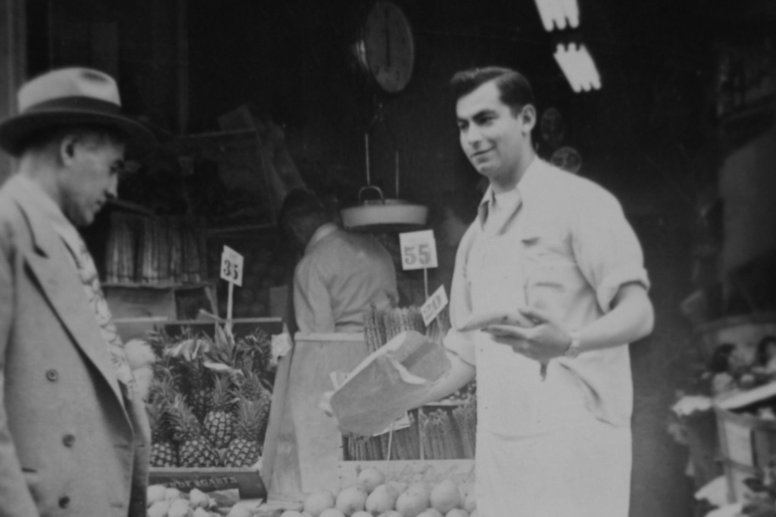
My father worked in a fruit stand.
He served in World War II in the US Navy on the USS Simpson.
And one more speculative point: I always believed that my father’s parents died in a fire in the 1930s. Although I was hesitant to ask my mom any questions about my search, not quite sure what she knew and what she kept hidden, I asked her straight out about the fire in the 1930s that killed my grandparents. The only thing she said was, “Where did you get this whole ‘died in a fire’ thing?” So, I checked with my sister June and asked if she knew how Frank and Elizabeth had died. She said, “In a fire in the 1930s.” OK, check.
None of the rest of my siblings had any idea what I was talking about. We certainly didn’t seem to have our act together on this whole “origins story” thing.
Perhaps it’s because I knew my maternal grandmother, I found myself drawn to focus my initial search on my father’s mother, Elizabeth, and planned to use that as leverage to find out about Frank, my father’s father. My first step in the quest was to find out how and when she got here. Why would be nice as well but given that we never even really knew she existed, that seemed a far stretch for the Ancestry.com search engine.
I began my Ancestry search looking for the ship that brought her to the United States. And the information popped up remarkably easily. There in front of me was the ship’s mani-fest from the RMS Olympic, showing my grandmother arriving in New York at Ellis Island on 28 July 1920.
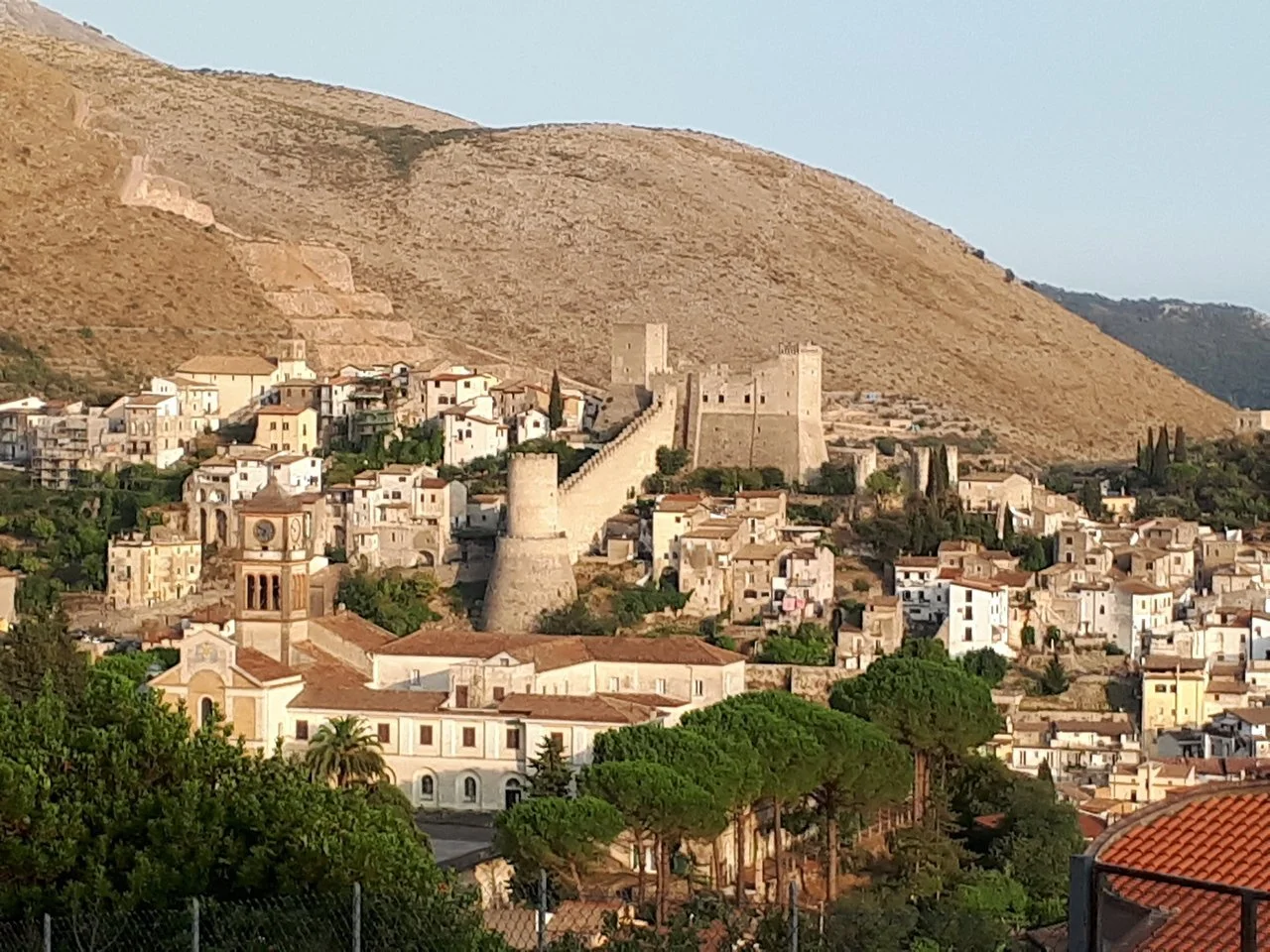
I discovered that Elisabeth’s hometown was Itri, a small city on the western coast of Italy about 100 kilometers north of Naples. The earliest records of Itri date to AD 914. The city was built on an ancient Roman road called the Appian Way. There was a massacre of Sardinian immigrants in Itri in 1911, provoked by fear of outsiders and job loss. Some things never change.
As I looked closely at the manifest, I realized something I had overlooked. My grandmother’s name was not actually Elizabeth. It was Elisabetta. I imagine she got anglicized some-where along the way or anglicized herself in the quest to fit in. This made me pause. Elizabeth was always just an abstract concept to me given that the name had no context. “Elizabeth” was not quite even a name, more a word than a person. Elisabetta sounded like a real person, someone who might have actually existed.
As I thought about this, it occurred to me that the naming of things carries curious weight. To name something is to give it power and identity and separateness. When we first interact with the world, we hear sounds, our parents begin to give names to the things in the world around us, including themselves. Ultimately, we become aware that there is a separateness between who we are and everything else. Our name becomes a bridge to the world around us.
Elisabetta means “pledged to God.” Hello, Elisabetta. According to the ship’s manifest, Elisabetta arrived via Cherbourg, France, rather than directly from Naples. That the ship originally set out from Southampton in the United Kingdom before making a stop in Cherbourg—and that Elisabetta left to immigrate to the United States from France rather than Naples—sounded somewhat exotic.
Elisabetta was five foot six with dark hair and dark eyes. According to the manifest, she was in good health, neither “deformed” nor “crippled,” and she had no “identifying marks.” She was neither a polygamist nor an anarchist. And she did not advocate the overthrow of the government of the United States, which is always a good thing. Her occupation was listed as domestic, and she could read and write Italian.
Her father—Voila! A great grandfather entered our story!—was Gioacchino. Even an amateur genealogist could recognize a great-grandfather when one appeared. Elisabetta’s US contact was a brother named Michele who lived at 105 East Third Street. She was planning to stay in the US.
As I delved a bit further, I discovered that she was traveling with a brother—Dominick—and his new wife, also named Elisabetta. He was a US citizen. I wonder when he came over.
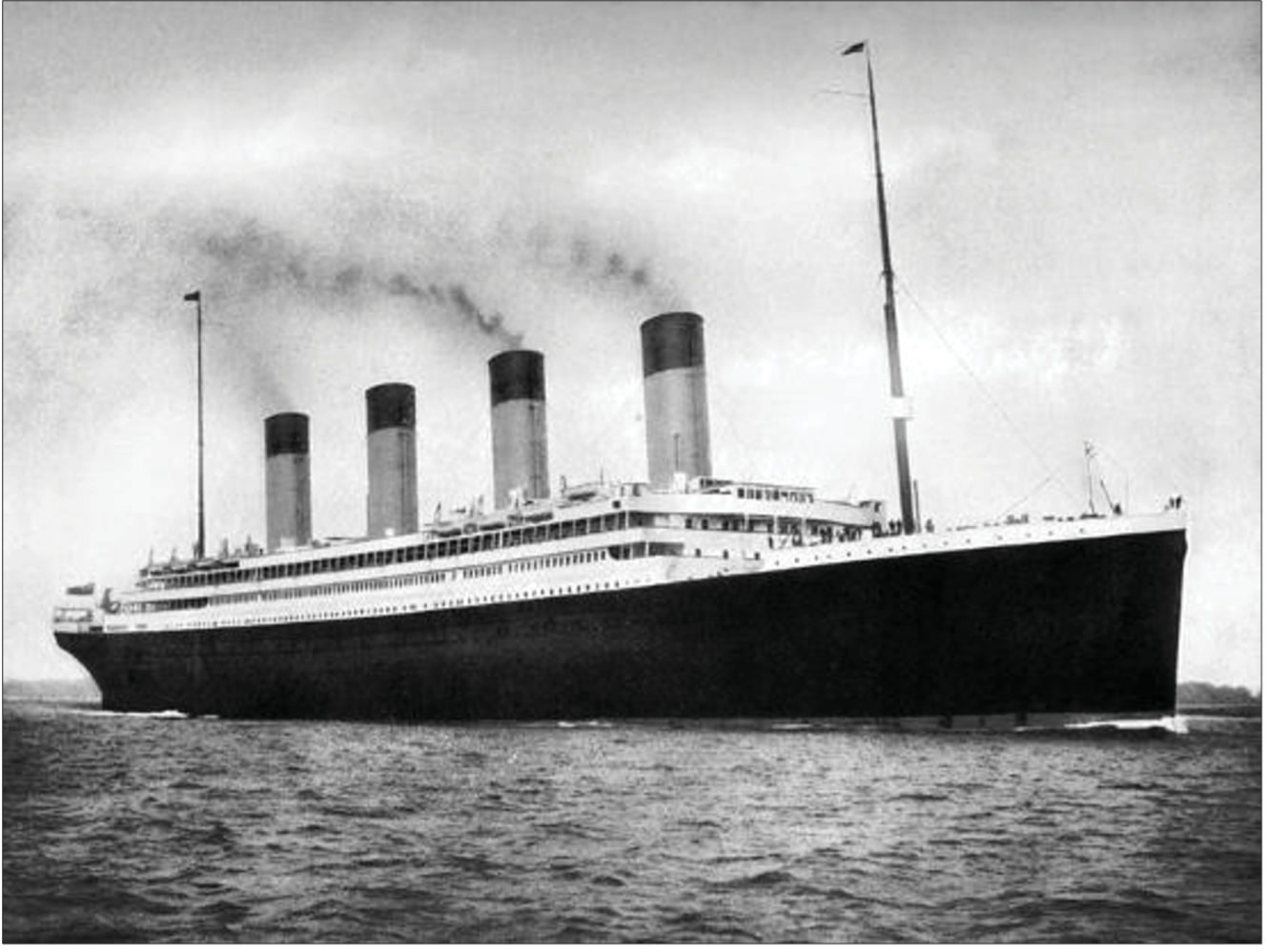
Curiously enough, the RMS Olympic turned out to be a famous ship. She was part of the White Star Line and was a sister ship and virtual double to the Titanic. Not a good omen.
On the plus side, though, I discovered that Douglas Fairbanks, Jr., and his new wife, Mary Pickford, were on the same ship, along with a teenage performer from England named Archibald Leach—who would ultimately morph into Cary Grant. I would imagine, though, that all their travel ac-commodations were a bit different from Elisabetta’s.
Meanwhile, on another ship, I found Frank, or rather Francesco. He came to the United States via Naples on 24 May 1921 aboard the SS Pannonia, which was built in 1904 and eventually scuttled in Hamburg in 1922. His father’s name is listed as Giuseppe; his point of contact in the US was his brother, also named Michele, eventually anglicized to Michael. Another great-grandfather revealed! He also shared his future wife’s predilections against anarchism and polygamy.
A good start for life in the United States.
I decided to get a bit adventurous and began searching for how to find Italian military records—I wondered whether Francesco fought in World War I. This was not nearly as easy as pushing a bunch of Ancestry.com buttons. After a lot of lot of back-forth back-forth Google Translate adventures on email, I found my grandfather’s military record. In addition to discovering his military record, I learned two facts that I had not known be-fore: 1) Francesco’s middle name was Paolo; and 2) He won two medals—Medaglia Commemorativa Della Guerra and the Medaglia Interalleata Della Vittoria.
——-
This is the THIRD of a series of Excerpts from Immigrant Secrets, the story of how I solved the mystery of my lost grandparents.
It would make a great holiday gift for someone who is interested in history or genealogy or really anyone who just likes a good mystery. I hope you’ll give the book a look.
Purchase link - https://www.amazon.com/Immigrant-Secrets-Search-My-Grandparents/dp/B0B45GTTPP.